There is no doubt about it; maintaining balance and reducing stiffness are essential for longevity and vibrant health regardless of age. These parameters start to deteriorate as we age. You see older people hang onto railings as they go downstairs or struggle to maintain their balance on a bike. You also see stiffening effects with people having difficulty getting up from the floor or looking over the shoulder while driving.
A recent study published in the British Journal of Sports Medicine outlined the potential importance of balance in determining longevity. The study participants had an average age of 61, and two-thirds were men. The test was the ability to do a One-Leg Stance (OLS) for 10 seconds. At the initial checkup, around 1 in 5 failed to balance on one leg for 10 seconds.
The study found that for those unable to complete the balance test, there was an 84% higher risk of death from any cause. This stark statistic underscores the importance of maintaining balance for our overall health and longevity.
The balance with the OLS was stable up to age 50. Afterward, there was a decline and a crossover point at around age 71, when more had a NO for the test–unable to perform the test—as opposed to a YES–able to stand on one leg for 10 seconds.
To assess the test, all preexisting factors, such as age, sex, BMI, and preexisting conditions or health risks, such as coronary artery disease, hypertension, obesity, high cholesterol, and diabetes, were taken into account.
Obviously, falls and generalized disorientation due to balance issues can dramatically influence one’s lifestyle, including shortening life. The risk increases as each year passes. In fact, falls in the elderly lead to a lot of death and disability. If you’re 80 and you fall and break a bone like the hip, it can be pretty debilitating, and depending on the general state of health, it can be a quick spiral toward death.
The other factor is stiffness. Life is motion, death is rigidity. How do stiffness and balance interact and play a role in longevity?
A relationship exists between stiffness––specifically spinal restriction––and balance. The spine and its relationship to the nervous system impact the inner ear balancing mechanism and communication with the brain. The spine is also essential in developing stiffness because it runs down the axis of the body. Various problems can lead to stiffness, including arthritis, inactivity, metabolic disorders, and spinal joint dysfunction (Subluxations).
Chiropractic care can help a person’s balance, not only by removing nerve interference that is impairing the balancing mechanism of the inner ear and brain but also by the sheer fact that when many people experience spinal subluxations, the axis of the body is out of balance. This is quite evident when a person lies face down on an adjusting table, and one leg is shorter than the other, or if standing up, the lobe of one ear is higher than the other. In other words, the system is out of kilter.
Chiropractic adjustments to reduce stiffness and imbalance are a bonus for the aging population, not just the young.
At any age, there are other things we can all do to improve our balance and reduce stiffness.
- Regular Exercise
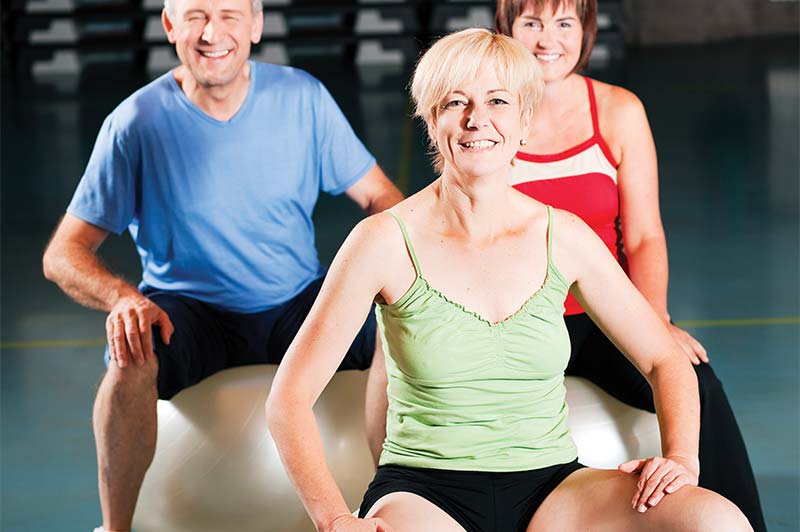
Regular exercise at any age reduces stiffness and improves balance. Sitting in front of a TV for many hours a day contributes to stiffening. Gym work or Pilates strengthens muscles and enhances a stronger, more balanced system.
- Tai Chi
This is also great for our physical and mental state. Tai chi can be likened to martial arts, but in slow motion. After a session, you can feel your muscles working, and over time, it leads to greater balance.
- Yoga
Yoga has many health benefits, including improving strength, balance, and flexibility. It is a modality that can be done at any age and according to one’s ability.
- Drink Water
Water is the universal solvent that our body needs to maintain a healthy system. Most people don’t drink enough water. It’s essential to flush out the toxins from the body.
The goal is to start doing those things early to enhance balance and flexibility. Once lost in our senior years, it is a more complex process and takes plenty of energy to achieve worthwhile goals. However, it’s never too late to start.